In fall, clear debris, clean mildew, tighten or replace fasteners, probe posts and joists for rot, fix drainage, and apply stain or oil while the weather is mild and dry. A one-hour inspection now catches the small problems that turn into expensive repairs by spring.
Austin does not have a real winter, so deck maintenance gets pushed off. Then spring storms arrive, the wood is already damp from months of leaves and shade, and a small soft spot turns into a board replacement or worse. Fall is the cheapest time to catch problems, and the weather is ideal for the work.
The 1-Hour Fall Walk-Through
1. Clear leaves and debris
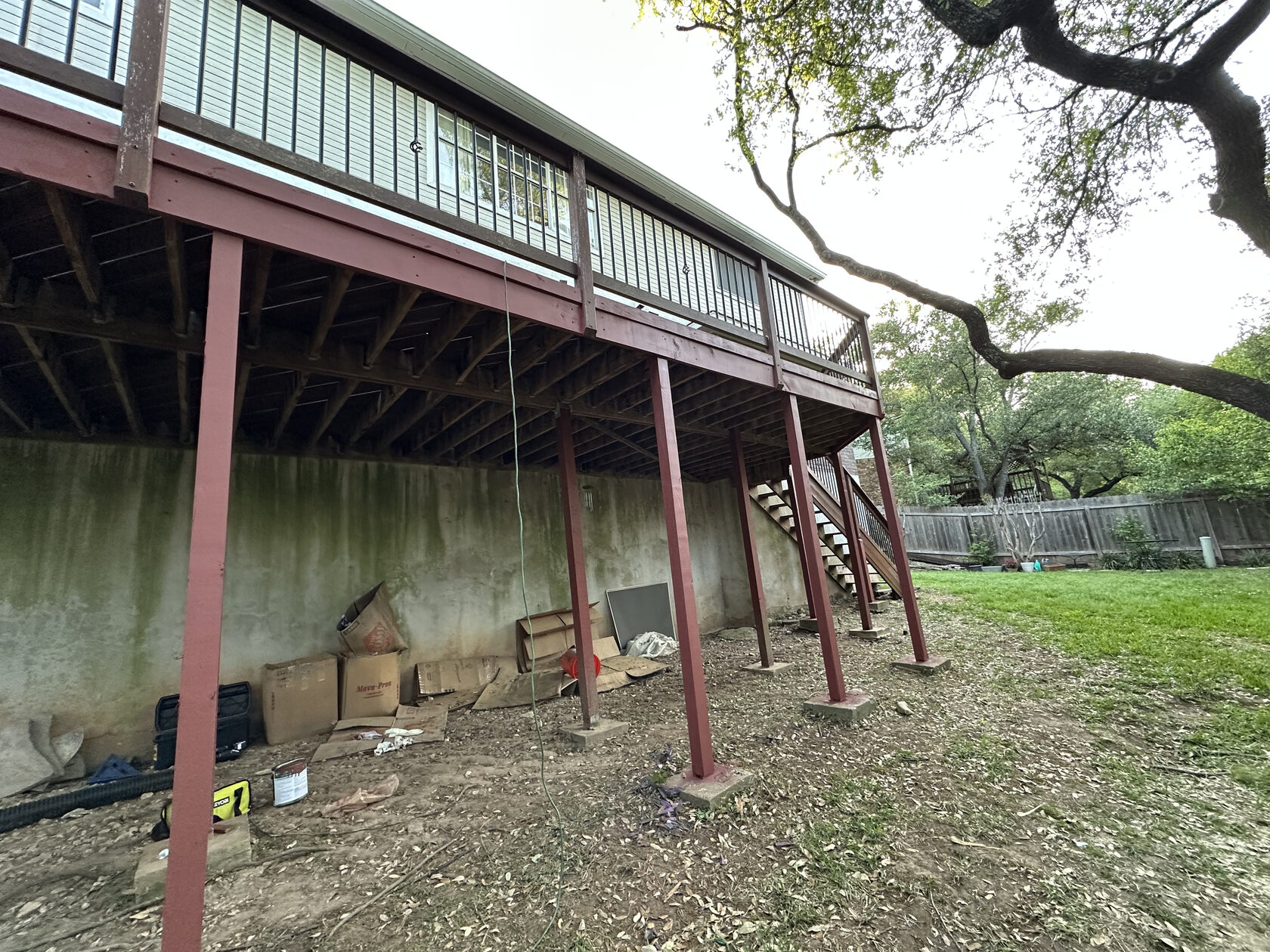
Sweep the surface and use a thin tool, such as a putty knife, to clear the gaps between boards. Packed leaves hold moisture against the wood and block drainage. Also clear under the deck, where leaves, stored items, and plants trap damp air.
2. Check fasteners
Walk the deck and look for screws or nails that have backed out. Reset or replace them with exterior-rated fasteners. Check joist hangers, bolts at the railings, and the hardware where the stairs attach.
3. Probe for rot
Push a screwdriver into the ends of boards, the tops of posts near the ground, the bottoms of stair stringers, and the joists around the house. Solid wood resists. Soft or crumbly wood does not. Learn more in our wood rot guide.
4. Inspect the ledger and flashing
The ledger is the board that attaches the deck to your house, and it is the most critical connection. Look for gaps in the flashing, water stains on the wall above, soft wood, and rusty or loose bolts. If anything looks wrong, have it checked by a professional before anyone uses the deck.
5. Test posts and railings
Push on each railing post and the top rail. They should feel solid with no wobble. Check the bases of the support posts for rot, cracks, and signs of shifting, which are common on our expansive clay soil. See how Texas clay soil damages decks and the signs your posts need replacement.
6. Look at drainage
Check that gutters and downspouts do not dump water onto or under the deck, that soil around footings is not eroding, and that the ground slopes away from the posts. Fall rains in Central Texas can be heavy, so this is a good time to find out.
7. Trim back plants and trees
Branches over the deck drop leaves and sap, and vines hold moisture against railings. Keep plants a few inches away from posts and boards so air can circulate.
Clean and Protect by Material
| Deck type | Fall task |
|---|---|
| Pressure-treated wood | Clean mildew and grime, let it dry fully, then stain or seal if the finish is worn |
| Painted wood | Spot-scrape and touch up failing areas, recoat when the film is wearing through |
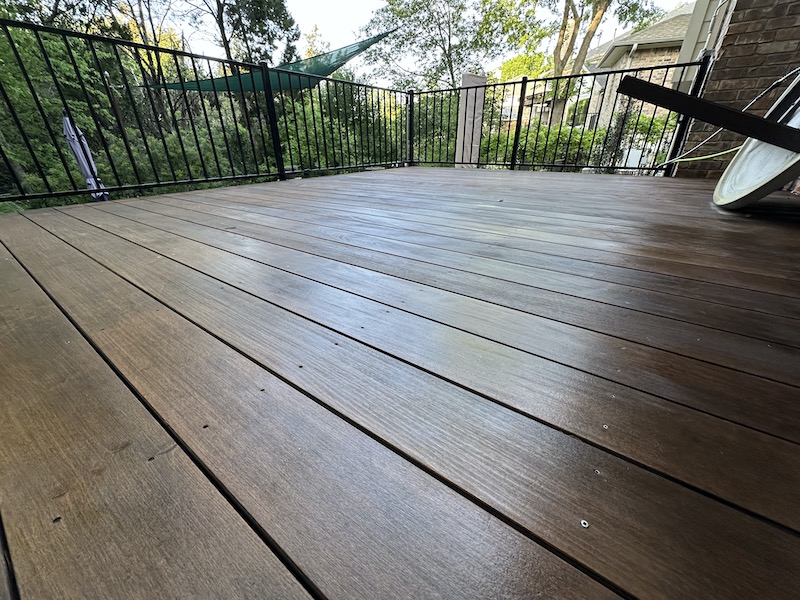
| IPE hardwood | Clean, brighten if needed, and oil if the wood is graying. See the IPE oiling guide |
| Composite | Sweep and wash with soap and water. Do not stain or paint. |
Why October and November Are the Best Months to Refinish
Stains, oils, and paints all have a temperature range on the label, and Austin's summer heat is outside of it for months. In fall the days are mild, humidity drops, and rain is less frequent than in spring. That gives the wood time to dry out and the finish time to cure. Choose a window of several dry days, and do not apply late in the day when dew can settle on the surface. Not sure whether to stain or paint? Read our paint vs stain comparison.
Before the Occasional Freeze
- Skip rock salt and ice melt on wood and composite. Use sand or a plastic shovel instead.
- Move planters off the surface so water does not sit under them.
- Store furniture cushions and covers, or lift furniture so legs do not trap moisture.
When to Call a Professional
Get an expert opinion if you find soft wood in posts, joists, or the ledger, if the deck has any movement, or if the stairs or railings are loose. These are structural issues, and the cost of fixing them climbs the longer they wait. A fall visit also means we can usually fit repairs in before the spring rush. See our completed projects to see what typical repairs look like.
Frequently Asked Questions
When is the best time to stain a deck in Austin?
Fall and spring. October and November usually give mild temperatures and dry stretches. Check the product label for its temperature range, make sure the deck has fully dried after cleaning, and avoid days with rain in the forecast.
How often should I inspect my deck?
Do a quick check twice a year, in spring and fall, and again after any major storm. A full safety walk-through is worth doing once a year.
Do I need to cover or winterize my deck in Texas?
No special winterizing is needed. Clear leaves and debris, keep drainage working, and avoid rock salt and metal shovels if we get ice, since both damage the surface.
What are the first signs of deck rot?
Soft spots when you probe with a screwdriver, dark or spongy wood, a musty smell, cracked paint that exposes dark wood, and boards that flex underfoot.
Should I clean my composite deck in the fall?
Yes. Sweep off leaves, then wash with soap and water. Leaves and dirt left sitting on composite trap moisture and can cause stains and mildew.