Use stain on newer wood in good shape when you want to see the grain and keep maintenance simple, because it wears away instead of peeling. Use paint or a solid-color finish on older, weathered wood or when you want a new color, because it covers more and seals the surface. On either one, prep and drying time decide how long it lasts, not the brand.
Every spring and fall, Austin homeowners ask us the same question: should the deck be painted or stained? Both can look great, and both can fail early in our climate. The right answer depends on the condition of the wood, the look you want, and how much maintenance you are willing to sign up for.
Paint vs. Stain at a Glance
| Penetrating / semi-transparent stain | Solid-color stain or deck paint | |
|---|---|---|
| Look | Shows wood grain, adds tint | Opaque color, grain mostly hidden |
| Hides worn wood | Very little | Hides color variation and light weathering |
| How it fails | Fades and wears away evenly | Can crack, blister, or peel where moisture gets under it |
| Re-coating | Clean and recoat | Scrape and sand failed areas first |
| Best for | Newer or well-kept wood | Older decks, color changes, matching railings or trim |
Why Austin Is Hard on Deck Finishes
Three things work against any coating here. UV exposure is intense for most of the year and breaks down finishes from the surface. Heat cycling makes wood expand and contract daily, which stresses film-forming coatings. And moisture swings, from storms to dry spells, push water in and out of the boards, especially at end grain and board edges.
Film-forming finishes such as paint look best on day one, but if water gets under the film it is trapped and the coating lifts. Penetrating stains soak in rather than sit on top, so they fade instead of peel. That is why stain is usually the lower-maintenance choice on wood that is in good shape.
When Paint Is the Right Call
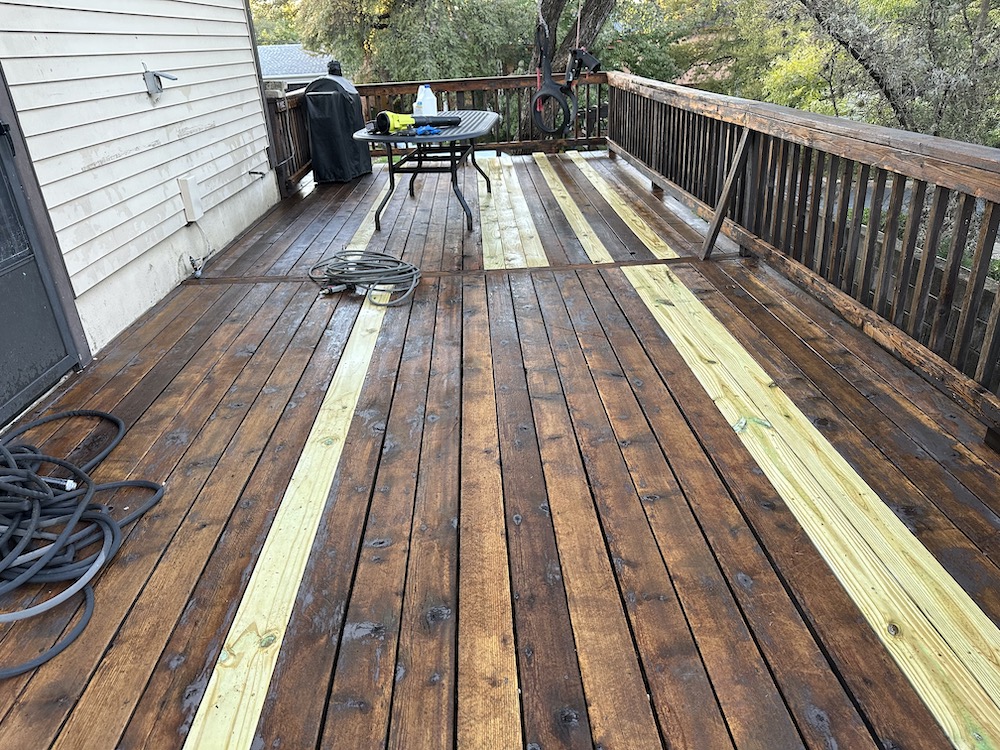
Paint or a solid-color finish makes sense when the boards are structurally sound but cosmetically tired, when old stain has turned blotchy, or when you want the deck to match railings, trim, or the house. We often paint after a repair, because new boards next to old ones will never match in a transparent stain.
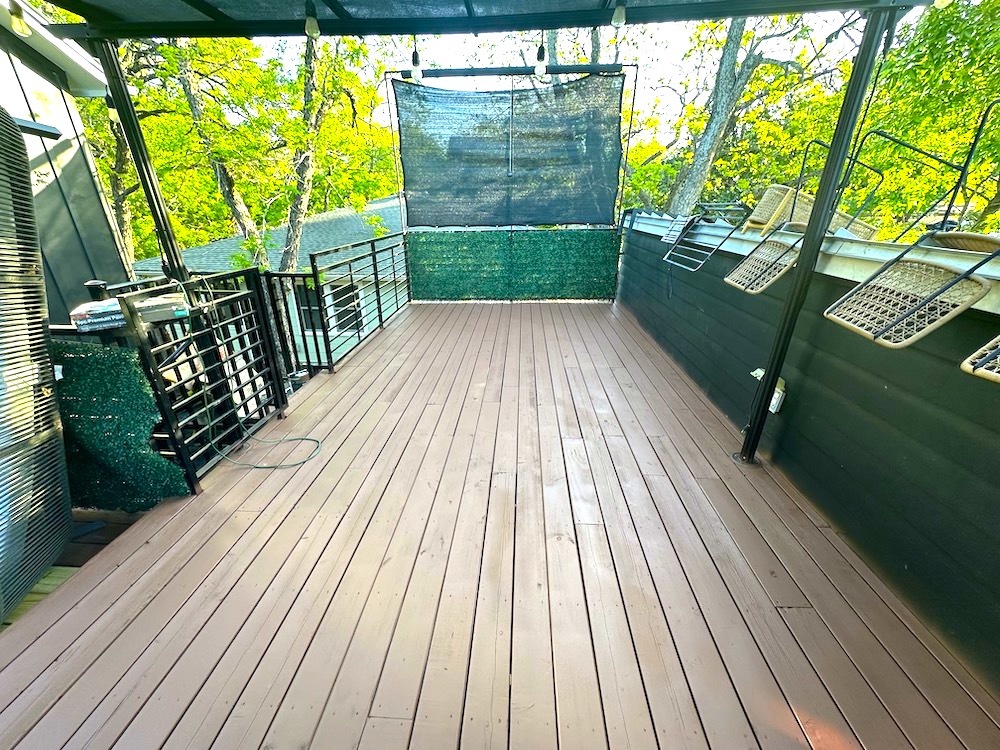
A recent example is a porch and stair job where the rotted floor and framing were replaced and everything was painted to match the existing railings. A color change like that is only possible with an opaque finish. See the porch and stair restoration.
When Stain Is the Better Choice
Choose stain when you like the wood grain, when the boards are fairly new, and when you want an easy maintenance cycle. A good stain gets cleaned and recoated before the wood is bare, with no scraping or heavy sanding. For product specifics, see our guide to the best deck stain for Texas heat.
Prep Matters More Than the Product
Most finish failures we see come from skipped prep, not bad paint. The steps that matter:
- Fix the deck first. Replace rotted or soft boards, reset popped fasteners, and repair framing. Paint does not stop rot. See our wood rot repair guide.
- Clean thoroughly. Pressure wash or scrub off dirt, mildew, and any loose old finish. Use moderate pressure so you do not fuzz the wood.
- Let it dry. Wood needs to dry out fully, often several days of dry weather, before it takes a finish. Coating damp wood is a common cause of peeling.
- Sand or scrape. Remove failing coating and smooth rough spots. Bare wood usually needs a primer or the manufacturer's recommended first coat.
- Apply in the right conditions. Follow the label for temperature range, and avoid direct midday sun on a hot surface. Early morning or a shaded, mild day works best.
- Use two coats where the label calls for it, and let each one cure properly before foot traffic.
Color and Heat Underfoot
Dark colors look sharp, but in direct Texas sun they can get very hot to walk on barefoot. If your deck is south- or west-facing, or you have kids and pets, lighter and mid-tone colors are more comfortable. Many deck paints also offer a textured, slip-resistant option, which is worth considering for stairs.
Don't Paint These Decks
- IPE and other tropical hardwoods: use a penetrating oil. Details in our IPE oiling guide.
- Composite decking: clean it rather than coat it. See composite deck repair.
- Soft or rotting wood: repair first, finish second.
What It Costs
Pricing depends on deck size, board condition, and how much repair comes with the refinishing. On our recent Austin jobs, repair-plus-refinish work on a typical deck has landed roughly between $1,500 and $4,500, and larger projects with structural work cost more. One job covering two connected decks and a bridge, with new boards, corrected structure, two renewed staircases, and a full repaint, came to about $5,800 over 5 days. For a full breakdown, read the deck repair cost guide.
Looking for a fall slot? Late summer is a good time to book, since the best finishing weather is September through November.
Frequently Asked Questions
How long does deck paint last in Austin, TX?
It depends on sun exposure, foot traffic, and prep. As a rough guide, a well-prepped painted or solid-color deck often needs a refresh every 2 to 4 years in Central Texas, and south- and west-facing areas wear first. Cheap coatings or skipped prep can fail much sooner.
Can I stain over paint?
Not directly. Stain needs bare, open wood to soak in, so painted wood has to be stripped or sanded back first. Going the other way is easier: sound, clean stained wood can usually be painted or covered with a solid-color finish if you follow the product label.
Does paint hide cracks and splinters?
It fills hairline checks and evens out color, but it does not repair raised grain, deep cracks, or soft boards. Splintered or rotted boards should be replaced or sanded before any finish goes on.
When is the best time to refinish a deck in Austin?
Spring and fall. Summer surfaces can be too hot for a good bond, and our storm season can wash out fresh coats. Pick a stretch with several dry days, mild temperatures, and a deck that has fully dried after cleaning.
Should I paint or stain an IPE or composite deck?
Neither. IPE hardwood is maintained with a penetrating oil, and composite decking is cleaned, not coated. Using paint or stain on either usually causes problems.