Replace individual treads when the stringers underneath are solid. Rebuild the stringers (or the whole staircase) when they are rotted, cracked, loose, or sitting in wet ground. Stairs also have to meet basic code on riser height, tread depth, and handrails, so a rebuild is a good time to bring them up to standard.
Stairs are the hardest-working part of a deck. They carry every step, hold water, and often sit closest to the ground, where moisture and insects get in first. In our area, rotted or loose stairs are one of the most common reasons homeowners call us, and one of the few repairs we do not recommend putting off.
Warning Signs Your Deck Stairs Need Work
- Treads that flex, bounce, or feel soft underfoot
- Stringers (the angled boards under the treads) that are cracked, split at the notches, or soft at the bottom
- Wobble or movement when you push the stairs sideways
- Rusted or backed-out nails and screws
- Handrail or guard posts that shift under load
- Uneven step heights after boards were replaced one at a time
- Dark, crumbly wood at the ground line, or a stringer that touches soil
Do the screwdriver test: push a screwdriver into the underside of the stringers, especially the bottom few inches and the notches. Solid wood resists. Rotted wood lets the tip sink in.
What Usually Fails First
Stringer bottoms. Stringers that rest directly on dirt or mulch wick up moisture and rot from below. They should sit on a concrete pad, footing, or other solid base.
Notches. Cutting notches for the treads removes wood in exactly the spot that carries the load. Over time cracks start at those inside corners.
Fasteners and connections. Stairs flex with every step. Weak connections at the top of the stringer, where it attaches to the deck frame, let the whole flight sag or pull away.
Treads. Cupped, split, and slippery boards are the visible problem, but they are rarely the only one.
Repair or Replace?
| Condition | Usual fix |
|---|---|
| Worn or split treads, solid stringers | Replace treads, reset fasteners |
| Rot confined to the bottom of one stringer | Cut out and replace the stringer; add a proper base |
| Cracked notches or several soft stringers | Replace all stringers and treads |
| Wobble, wrong step heights, or no solid footing | Rebuild the staircase to code |
| Rot in the deck frame where stairs attach | Repair the frame first, then the stairs |
Stairs are only as good as what they attach to. If the rim joist or framing at the top is rotted, new stair parts will not hold. That is why we inspect the frame whenever we replace a staircase. See also our guide to failing deck posts.
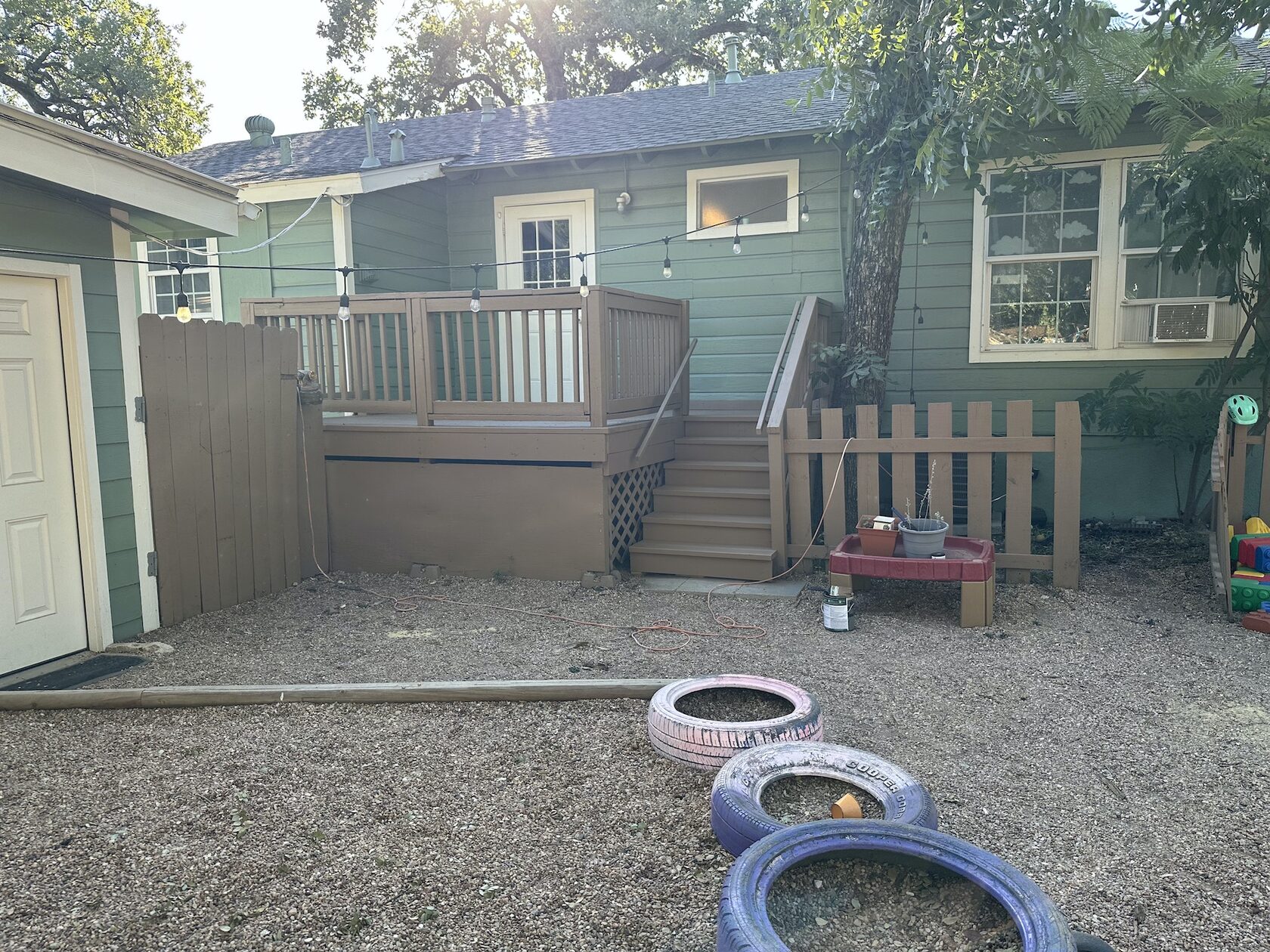
Basic Code Rules for Deck Stairs
Code requirements come from the International Residential Code, with local amendments. These are the main points, and your local building department has the final say:
- Riser height: no more than 7¾ inches
- Tread depth: at least 10 inches
- Consistency: steps in a flight should be nearly identical in height. Even small differences cause trips, which is why replacing one board at a time can create problems.
- Handrail: required on stairs with four or more risers, graspable, and 34 to 38 inches above the tread nose
- Guards: required where the walking surface is more than 30 inches above grade, at least 36 inches tall, with openings small enough that a 4-inch sphere cannot pass through
- Landing: a level landing at the bottom and top of the stairs
These are the kinds of details to confirm with a contractor before work starts, especially if the stairs will be rebuilt rather than repaired.
What a Proper Stair Rebuild Involves
- Remove the old stairs and check the attachment point and framing.
- Prepare a solid base so the stringers do not touch soil.
- Cut new stringers to uniform rise and run, using pressure-treated lumber rated for ground or weather exposure.
- Connect them properly with structural connectors and corrosion-resistant hardware, not just a few nails.
- Install treads with the right gap for drainage and secure them with exterior-rated fasteners.
- Add or reset railings so the handrail and guards are firm.
- Finish the wood. Paint or stain protects the cut ends and tread surfaces. See our guide to deck paint vs stain.
Typical Costs
| Scope | Typical range in Austin |
|---|---|
| Replace a few tread boards | Hundreds of dollars |
| New stringers and treads, short flight | Roughly $800 to $2,500 |
| Full staircase rebuild with railings | Roughly $2,500 to $6,000+ |
These are general ranges, not a quote. Height, number of steps, landings, railings, and finish all change the price. For the full picture, see the deck repair cost guide or request a free on-site estimate.
Material Choices
Pressure-treated pine is the standard for stringers and a cost-effective choice for treads. Composite treads resist rot and slips and need less upkeep, but cost more upfront. IPE treads are extremely durable and need regular oiling. For help choosing, read IPE vs composite.
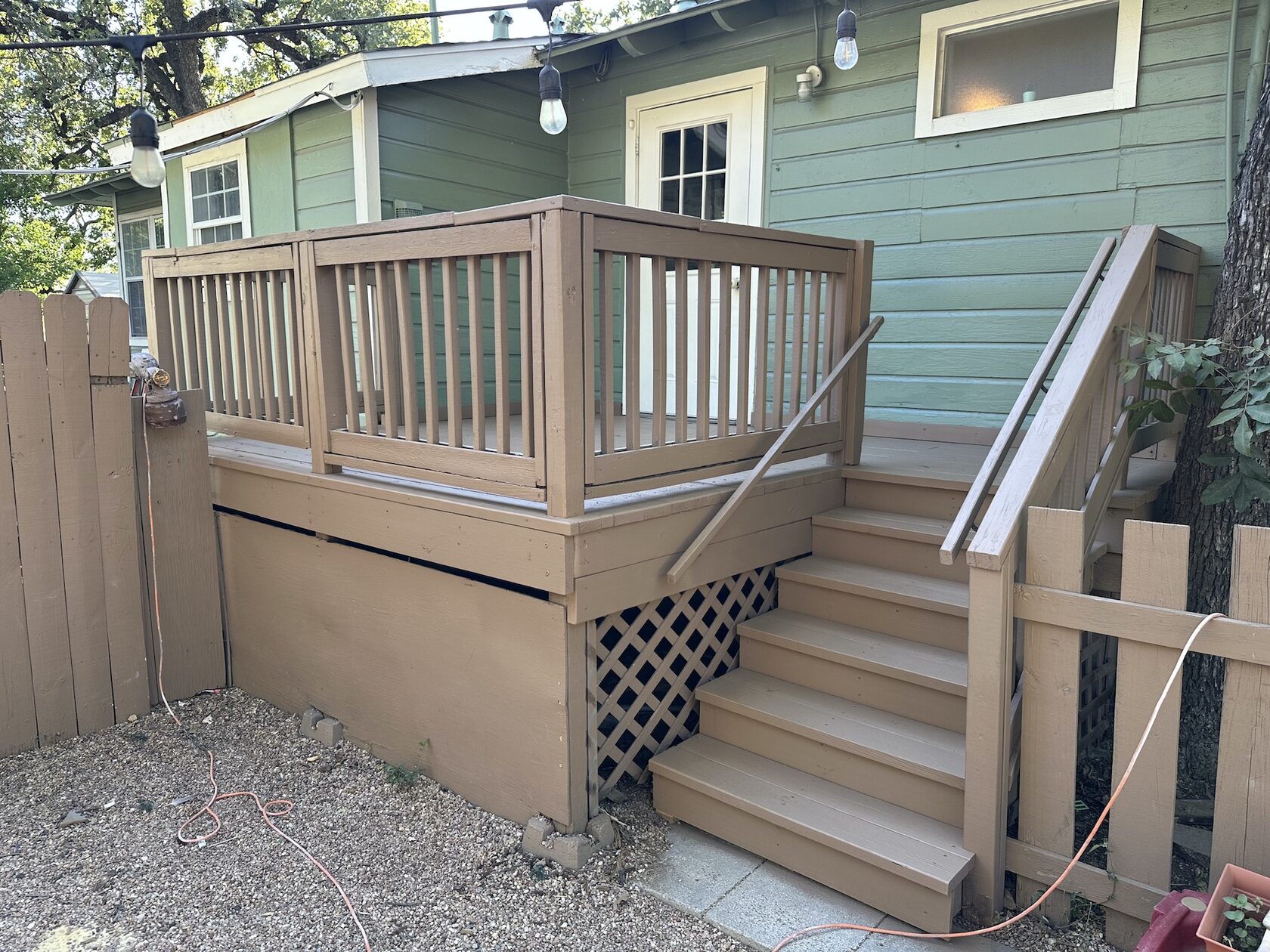
When to Call a Pro
Minor tread swaps are manageable for a handy homeowner. Call a professional when stringers are rotted, when the stairs are tall or wobble, when the deck frame is involved, or when you are not sure the stairs meet code. A fall from stairs is among the most common deck injuries, and the cost of a proper repair is small compared to the risk.
Frequently Asked Questions
How much does it cost to repair deck stairs in Austin?
Replacing a few treads is a small job, often a few hundred dollars. Replacing stringers and treads on a short flight typically costs more, and a full staircase rebuild with new railings is the top end. Access, height, and finish (paint or stain) change the price, so get an on-site estimate.
Do I need a permit to replace deck stairs?
Like-for-like repairs often do not, but rebuilding a staircase or changing its layout may. Permit rules depend on the city and your project, so confirm with the City of Austin or your local jurisdiction before starting.
What is the most common reason deck stairs fail?
Rot at the bottom of the stringers, where wood touches soil or stays wet, followed by loose or corroded fasteners and tread boards that have split or cupped.
Can I just replace the stair treads?
Yes, if the stringers are solid. Probe them with a screwdriver, especially at the bottom and at every notch. If the point sinks in easily, the stringers need replacement.
Should deck stair treads be painted?
Painted stairs can look good and match the railings, but they get slippery when wet. Use a slip-resistant additive or a textured deck paint on treads.